What curb appeal actually means
Curb appeal is the impression your property makes from the street, before anyone walks through the front door. It is part aesthetics and part signal: a clean, intentional entry tells visitors — and buyers — that the rest of the home has been cared for the same way.
For most Portland-area homes, the biggest surface areas visible from the curb are not the siding or the trim. They are the driveway, the front walkway and the edges where hardscape meets planting. That is why hardscape improvements tend to change how a property reads far more than a fresh coat of paint does.
Why it matters more than people expect
- It is the first and last thing people see. A cracked, settling driveway undermines an otherwise well-kept home.
- It compounds. Good hardscape makes landscaping look intentional. Poor hardscape makes even excellent planting look neglected.
- It is functional. Curb appeal improvements — regrading a walkway, fixing drainage, widening a driveway — usually solve a practical problem at the same time.
Where hardscape moves the needle most
The driveway
The driveway is typically the single largest visible surface. Replacing cracked, patched concrete with pavers changes the entire front elevation. Pavers also let you introduce a border course or a contrasting banding detail that visually frames the house.
The front walkway
A paver walkway is a small square-foot investment with an outsized effect. Widening a narrow path to a comfortable width, adding a gentle curve, and edging it cleanly against the lawn reads as custom rather than builder-standard.
Edges and transitions
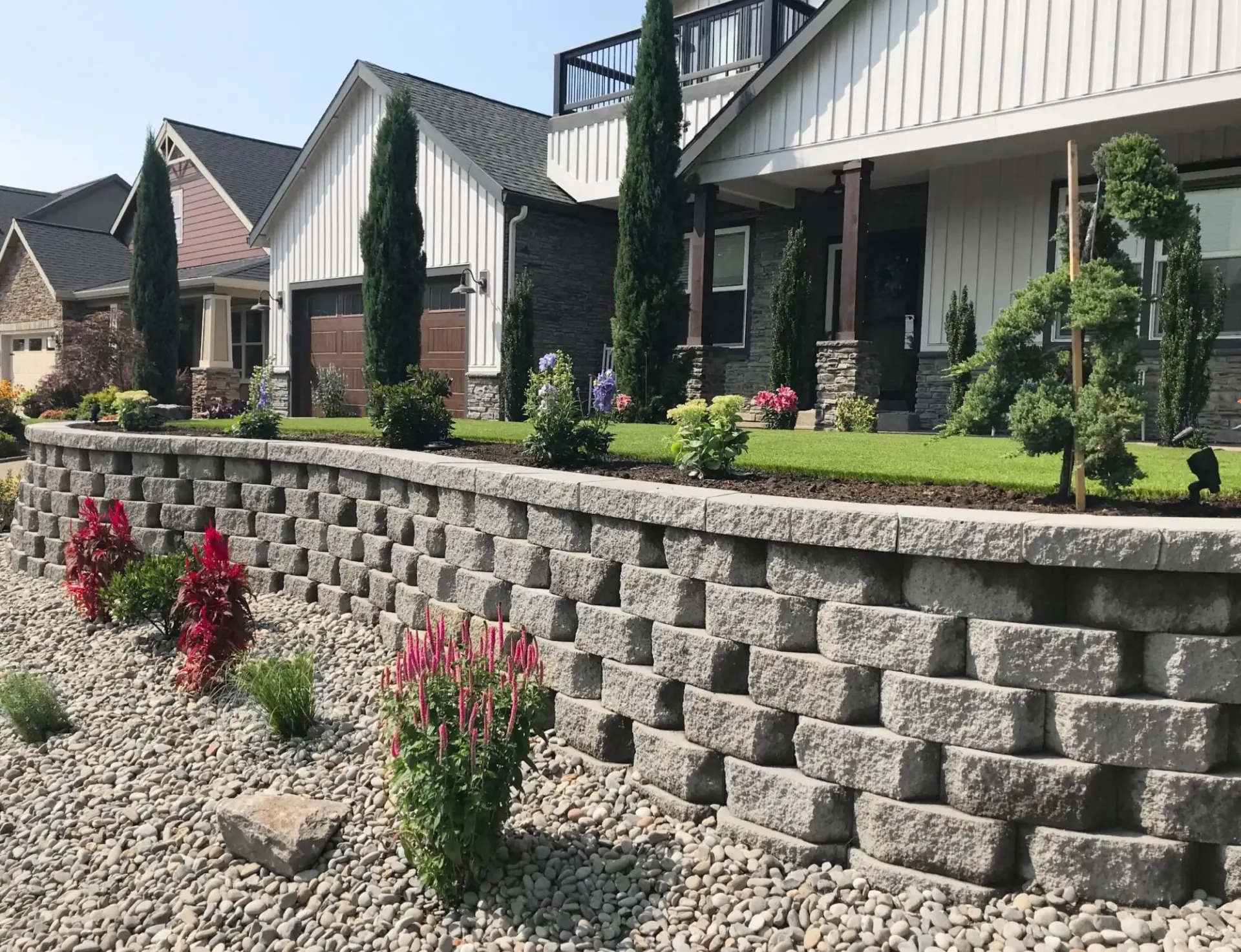
Most of what makes hardscape look expensive is the edge detail — the line where paving meets bed, lawn or wall. Crisp, restrained edges are what separate a professional installation from a weekend project.
The Portland factor
Our climate is hard on flatwork. Wet winters, heavy clay soils and freeze-thaw cycles will heave and crack anything installed on a thin or poorly compacted base. Curb appeal that lasts here starts below the surface:
- Excavate to the correct depth for the use and the soil.
- Install and compact a proper crushed-rock base in lifts.
- Grade so water moves away from the house and off the surface.
- Restrain the edges so the field cannot migrate over time.
Skip any of those and the project will look excellent for two seasons and tired by the fifth.
Where to start
If you are weighing improvements, walk to the street and look back at your house honestly. The element your eye lands on first — usually the driveway or the entry path — is where your budget will do the most work.
We offer free on-site design consultations across the Portland metro. We will walk the property with you, talk through materials and layout, and give you a clear written proposal before anything begins.